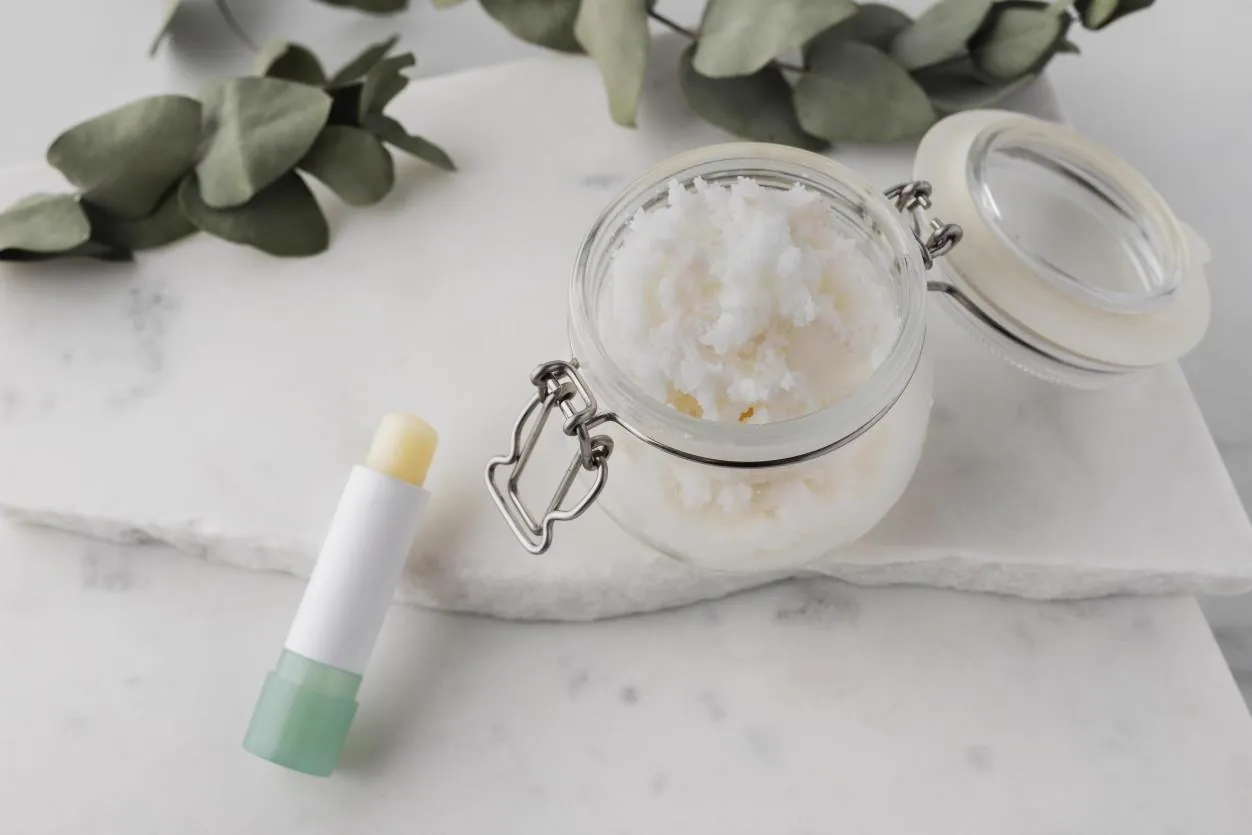
What actually happens between raw wax and the finished tube on your desk? Most people picture a single melt-and-pour step. The real lip balm manufacturing process runs through several distinct stages, each with its own equipment and checkpoints. Waxes, butters, and oils melt together before heat-sensitive ingredients ever join them. This sequence matters to a brand sourcing a manufacturer. It matters just as much to a formulator studying the process, or anyone simply curious about what goes into the stick they use daily.
What Goes into a Lip Balm?
Every formula built through the lip balm manufacturing process draws from a small set of core ingredient groups. The ratio between them shifts depending on the texture a brand wants. A firmer stick needs more wax, while a softer balm needs more oil and butter.
- Waxes such as beeswax or candelilla give the product its structure and hold
- Butters like shea and cocoa butter add richness and a smoother glide
- Oils such as castor, coconut, and sweet almond oil carry moisture and shine
- Vitamin E and antioxidants support shelf stability
- Flavour oils, sweeteners, and optional tint are added for the finished sensory experience
Unlike many colour cosmetics, most lip balm formulas skip heavy pigment altogether. This keeps the ingredient list and the production line simpler.
Step by Step Lip Balm Manufacturing Process
The table below breaks the lip balm manufacturing process into its core stages.
| Stage | What Happens | Why It Matters |
|---|---|---|
| Weighing and measuring | Manufacturers measure each ingredient to formulation ratios | Accuracy here determines texture consistency batch to batch |
| Melting | Waxes, butters, and oils melt together in a controlled heat vessel | Even melting prevents a grainy or separated base |
| Cooling and adding actives | The base cools slightly before flavour, vitamin E, and sweetener are added | Heat-sensitive ingredients degrade if added too hot |
| Mixing | The full batch is blended to an even, uniform consistency | Poor mixing leaves streaks or uneven texture in the stick |
| Filling and setting | The mixture fills tubes or tins, then cools to set | Fill weight and cooling speed affect finish and shelf appearance |
| Capping and packaging | Manufacturers cap each unit, label it with a batch code, and pack it | Batch coding supports traceability and regulatory compliance |
Weighing and Melting the Base
Every batch starts with precise measurement, since even small variations in wax-to-oil ratio change how firm or soft the finished stick feels. Waxes, butters, and oils then melt together in a jacketed kettle or controlled heat vessel. Manufacturers keep the temperature steady rather than overheating, since excess heat can affect the texture and scent of sensitive oils.
Cooling and Adding Heat-Sensitive Ingredients
Once the base is fully melted, it cools slightly before flavour oils, sweeteners, and vitamin E join the mix. Adding these ingredients too early, while the base is still very hot, can weaken their performance or alter their scent. Manufacturers turn the plain wax-and-oil base into a finished, flavoured product at this stage.
Mixing to a Uniform Consistency
The full batch gets blended until texture and ingredients read even throughout, not just near the surface. This step is considerably simpler in the lip balm manufacturing process than in colour cosmetics, since there is no pigment grinding stage to manage.
Filling, Setting, and Quality Checks
The mixture fills tubes, tins, or moulds, then cools to set completely before capping. Manufacturers check fill weight consistency and run a melting range test, confirming the stick holds its shape under normal handling and storage conditions.
A stability check over time rounds out the quality process before a batch clears for dispatch.
Common Manufacturing Defects and How They Are Prevented
Most quality issues in the lip balm manufacturing process trace back to a specific stage rather than a random fault.
| Defect | Root Cause |
|---|---|
| Sweating, where oil rises to the surface | Wax to oil ratio or cooling rate is off |
| Grainy or uneven texture | Incomplete melting or mixing of the wax phase |
| Soft, mushy consistency | Too little wax relative to oils and butters |
Manufacturers who understand this chain can correct a defect at its source instead of reworking finished stock.
Indian Regulatory Requirements for Lip Balm Manufacturing
Two frameworks govern the lip balm manufacturing process in India, and both apply to the facility, not just the formula.
BIS IS 10284 Lip Balm Standard
- IS 10284:1982, officially titled the specification for lipsalve, is India’s dedicated lip balm standard
- Sets melting range, consistency, and stability requirements
- Covers packaging and labelling, including batch numbers and net mass
Cosmetics Rules, 2020
- The Central Drugs Standard Control Organisation (CDSCO) administers these rules
- They govern cosmetic manufacturing licensing and colour additive use
- Facility licensing is required under these rules, so confirming a manufacturer’s current licence status matters before signing on
What This Means for Brand Founders?
- Ask a potential manufacturing partner about facility licensing early, not after the first run
- Request current licensing documents and recent batch test records before committing
- A transparent manufacturer is usually the safer long-term partner, even at a slightly higher price
How Kamicka Organic Helps?
Kamicka Organic has run contract and private label manufacturing since 2020. The work covers formulation through to packaging for hair, skin, body, baby, and personal care categories, including lip balm. The facility works with over 300 SKUs and sources from a network of 60+ farmers, women’s self-help groups, and local artisans across the Himalayan belt. That partnership model has supported more than thirty brands across twelve or more international markets.
Standard formulations start at a minimum order of 250 units per SKU, while customised formulations run between 500 and 1,000 units. Production typically completes in thirty to sixty days, and the facility holds ISO 9001:2015, GMP, and FSSAI certifications.
Brands researching lip balm manufacturers in India can take these specifics directly to the Kamicka Organic team for their own formulation and volume needs.
Conclusion
The lip balm manufacturing process moves through clear, sequential stages: weighing and melting, mixing, filling, and quality testing. Each stage protects a specific part of the finished product, covering texture, scent, and shelf stability. A manufacturer who documents every stage and meets India’s licensing standards gives a brand founder a dependable starting point for launch.
Kamicka Organic has built exactly that kind of dependability since 2020, running private label lip balm manufacturing to the standards covered above. The certifications and documented process described earlier back it up. A brand ready to plan production can bring these specifics straight to the Kamicka Organic team for a conversation.
FAQs
1. What are the main stages of the lip balm manufacturing process?
The lip balm manufacturing process runs through five core stages. These are weighing and melting the base, cooling and adding heat-sensitive ingredients, mixing to a uniform consistency, filling and setting, and capping and packaging.
2. What ingredients are used in the lip balm manufacturing process?
Waxes, butters, and oils form the backbone of the lip balm manufacturing process. Vitamin E, flavour oils, and sweeteners get added in small amounts, depending on the desired texture and flavour.
3. How long does the lip balm manufacturing process take?
Timelines vary by manufacturer and batch size. The lip balm manufacturing process typically spans several weeks once formulation is finalised, covering mixing, filling, and the quality checks required before dispatch.
4. What quality checks are part of the lip balm manufacturing process?
A melting range test and a stability check are the two standard checks within the lip balm manufacturing process. Together, they confirm the finished stick holds its shape under normal handling and storage.
5. What equipment is used in the lip balm manufacturing process?
Manufacturers rely on jacketed heating vessels, mixing equipment, and filling lines for tubes or tins, all core to the lip balm manufacturing process. Each tool plays a defined role in turning raw wax into a finished stick.
6. Does Kamicka Organic handle the full lip balm manufacturing process for private label brands?
Yes, Kamicka Organic manages the entire lip balm manufacturing process in-house, from formulation through to packaging, as part of its private label and contract manufacturing work since 2020.
7. What is the minimum order quantity for Kamicka Organic’s lip balm manufacturing process?
Kamicka Organic’s lip balm manufacturing process starts at 250 units per SKU for standard formulations, with customised formulations requiring 500 to 1,000 units and a lead time of thirty to sixty days.